The structural similarity index measure (SSIM) is a method for predicting the perceived quality of digital television and cinematic pictures, as well as other kinds of digital images and videos. It is also used for measuring the similarity between two images. The SSIM index is a full reference metric; in other words, the measurement or prediction of image quality is based on an initial uncompressed or distortion-free image as reference. SSIM is a perception-based model that considers image degradation as perceived change in structural information, while also incorporating important perceptual phenomena, including both luminance masking and contrast masking terms. This distinguishes from other techniques such as mean squared error (MSE) or peak signal-to-noise ratio (PSNR) that instead estimate absolute errors. Structural information is the idea that the pixels have strong inter-dependencies especially when they are spatially close. These dependencies carry important information about the structure of the objects in the visual scene. Luminance masking is a phenomenon whereby image distortions (in this context) tend to be less visible in bright regions, while contrast masking is a phenomenon whereby distortions become less visible where there is significant activity or "texture" in the image. == History == The predecessor of SSIM was called Universal Quality Index (UQI), or Wang–Bovik index, which was developed by Zhou Wang and Alan Bovik in 2001. This evolved, through their collaboration with Hamid Sheikh and Eero Simoncelli, into the current version of SSIM, which was published in April 2004 in the IEEE Transactions on Image Processing. In addition to defining the SSIM quality index, the paper provides a general context for developing and evaluating perceptual quality measures, including connections to human visual neurobiology and perception, and direct validation of the index against human subject ratings. The basic model was developed in the Laboratory for Image and Video Engineering (LIVE) at The University of Texas at Austin and further developed jointly with the Laboratory for Computational Vision (LCV) at New York University. Further variants of the model have been developed in the Image and Visual Computing Laboratory at University of Waterloo and have been commercially marketed. SSIM subsequently found strong adoption in the image processing community and in the television and social media industries. The 2004 SSIM paper has been cited over 50,000 times according to Google Scholar, making it one of the highest cited papers in the image processing and video engineering fields. It was recognized with the IEEE Signal Processing Society Best Paper Award for 2009. It also received the IEEE Signal Processing Society Sustained Impact Award for 2016, indicative of a paper having an unusually high impact for at least 10 years following its publication. Because of its high adoption by the television industry, the authors of the original SSIM paper were each accorded a Primetime Engineering Emmy Award in 2015 by the Television Academy. == Algorithm == The SSIM index is calculated between two windows of pixel values x {\displaystyle x} and y {\displaystyle y} of common size, from corresponding locations in two images to be compared. These SSIM values can be aggregated across the full images by averaging or other variations. === Special-case formula === In one simple special case, further explained in the next section, the SSIM measure between x {\displaystyle x} and y {\displaystyle y} is: SSIM ( x , y ) = ( 2 μ x μ y + c 1 ) ( 2 σ x y + c 2 ) ( μ x 2 + μ y 2 + c 1 ) ( σ x 2 + σ y 2 + c 2 ) {\displaystyle {\hbox{SSIM}}(x,y)={\frac {(2\mu _{x}\mu _{y}+c_{1})(2\sigma _{xy}+c_{2})}{(\mu _{x}^{2}+\mu _{y}^{2}+c_{1})(\sigma _{x}^{2}+\sigma _{y}^{2}+c_{2})}}} with: μ x {\displaystyle \mu _{x}} the pixel sample mean of x {\displaystyle x} ; μ y {\displaystyle \mu _{y}} the pixel sample mean of y {\displaystyle y} ; σ x 2 {\displaystyle \sigma _{x}^{2}} the sample variance of x {\displaystyle x} ; σ y 2 {\displaystyle \sigma _{y}^{2}} the sample variance of y {\displaystyle y} ; σ x y {\displaystyle \sigma _{xy}} the sample covariance of x {\displaystyle x} and y {\displaystyle y} ; c 1 = ( k 1 L ) 2 {\displaystyle c_{1}=(k_{1}L)^{2}} , c 2 = ( k 2 L ) 2 {\displaystyle c_{2}=(k_{2}L)^{2}} two variables to stabilize the division with weak denominator; L {\displaystyle L} the dynamic range of the pixel-values (typically this is 2 # b i t s p e r p i x e l − 1 {\displaystyle 2^{\#bits\ per\ pixel}-1} ); k 1 = 0.01 {\displaystyle k_{1}=0.01} and k 2 = 0.03 {\displaystyle k_{2}=0.03} by default. === General formula and components === The SSIM formula is based on three comparison measurements between the samples of x {\displaystyle x} and y {\displaystyle y} : luminance ( l {\displaystyle l} ), contrast ( c {\displaystyle c} ), and structure ( s {\displaystyle s} ). The individual comparison functions are: l ( x , y ) = 2 μ x μ y + c 1 μ x 2 + μ y 2 + c 1 {\displaystyle l(x,y)={\frac {2\mu _{x}\mu _{y}+c_{1}}{\mu _{x}^{2}+\mu _{y}^{2}+c_{1}}}} c ( x , y ) = 2 σ x σ y + c 2 σ x 2 + σ y 2 + c 2 {\displaystyle c(x,y)={\frac {2\sigma _{x}\sigma _{y}+c_{2}}{\sigma _{x}^{2}+\sigma _{y}^{2}+c_{2}}}} s ( x , y ) = σ x y + c 3 σ x σ y + c 3 {\displaystyle s(x,y)={\frac {\sigma _{xy}+c_{3}}{\sigma _{x}\sigma _{y}+c_{3}}}} The SSIM for each block is then a weighted combination of those comparative measures: SSIM ( x , y ) = l ( x , y ) α ⋅ c ( x , y ) β ⋅ s ( x , y ) γ {\displaystyle {\text{SSIM}}(x,y)=l(x,y)^{\alpha }\cdot c(x,y)^{\beta }\cdot s(x,y)^{\gamma }} Choosing the third denominator stabilizing constant as: c 3 = c 2 / 2 {\displaystyle c_{3}=c_{2}/2} leads to a simplification when combining the c and s components with equal exponents ( β = γ {\displaystyle \beta =\gamma } ), as the numerator of c is then twice the denominator of s, leading to a cancellation leaving just a 2. Setting the weights (exponents) α , β , γ {\displaystyle \alpha ,\beta ,\gamma } to 1, the formula can then be reduced to the special case shown above. === Mathematical properties === SSIM satisfies the identity of indiscernibles, and symmetry properties, but not the triangle inequality or non-negativity, and thus is not a distance function. However, under certain conditions, SSIM may be converted to a normalized root MSE measure, which is a distance function. The square of such a function is not convex, but is locally convex and quasiconvex, making SSIM a feasible target for optimization. === Application of the formula === In order to evaluate the image quality, this formula is usually applied only on luma, although it may also be applied on color (e.g., RGB) values or chromatic (e.g. YCbCr) values. The resultant SSIM index is a decimal value between -1 and 1, where 1 indicates perfect similarity, 0 indicates no similarity, and -1 indicates perfect anti-correlation. For an image, it is typically calculated using a sliding Gaussian window of size 11×11 or a block window of size 8×8. The window can be displaced pixel-by-pixel on the image to create an SSIM quality map of the image. In the case of video quality assessment, the authors propose to use only a subgroup of the possible windows to reduce the complexity of the calculation. === Variants === ==== Multi-scale SSIM ==== A more advanced form of SSIM, called Multiscale SSIM (MS-SSIM) is conducted over multiple scales through a process of multiple stages of sub-sampling, reminiscent of multiscale processing in the early vision system. It has been shown to perform equally well or better than SSIM on different subjective image and video databases. ==== Multi-component SSIM ==== Three-component SSIM (3-SSIM) is a form of SSIM that takes into account the fact that the human eye can see differences more precisely on textured or edge regions than on smooth regions. The resulting metric is calculated as a weighted average of SSIM for three categories of regions: edges, textures, and smooth regions. The proposed weighting is 0.5 for edges, 0.25 for the textured and smooth regions. The authors mention that a 1/0/0 weighting (ignoring anything but edge distortions) leads to results that are closer to subjective ratings. This suggests that edge regions play a dominant role in image quality perception. The authors of 3-SSIM have also extended the model into four-component SSIM (4-SSIM). The edge types are further subdivided into preserved and changed edges by their distortion status. The proposed weighting is 0.25 for all four components. ==== Structural dissimilarity ==== Structural dissimilarity (DSSIM) may be derived from SSIM, though it does not constitute a distance function as the triangle inequality is not necessarily satisfied. DSSIM ( x , y ) = 1 − SSIM ( x , y ) 2 {\displaystyle {\hbox{DSSIM}}(x,y)={\frac {1-{\hbox{SSIM}}(x,y)}{2}}} ==== Video quality metrics and temporal variants ==== It is worth noting that the original vers
Fillrate
In computer graphics, a video card's pixel fillrate refers to the number of pixels that can be rendered on the screen and written to video memory in one second. Pixel fillrates are given in megapixels per second or in gigapixels per second (in the case of newer cards), and are obtained by multiplying the number of render output units (ROPs) by the clock frequency of the graphics processing unit (GPU) of a video card. A similar concept, texture fillrate, refers to the number of texture map elements (texels) the GPU can map to pixels in one second. Texture fillrate is obtained by multiplying the number of texture mapping units (TMUs) by the clock frequency of the GPU. Texture fillrates are given in mega or gigatexels per second. However, there is no full agreement on how to calculate and report fillrates. Another possible method is to multiply the number of pixel pipelines by the GPU's clock frequency. The results of these multiplications correspond to a theoretical number. The actual fillrate depends on many other factors. In the past, the fillrate has been used as an indicator of performance by video card manufacturers such as ATI and NVIDIA, however, the importance of the fillrate as a measurement of performance has declined as the bottleneck in graphics applications has shifted. For example, today, the number and speed of unified shader processing units has gained attention. Although fillrate doesn't provide a substantial bottleneck in games, it can still provide a bottleneck for certain parts of the game, for example applying a gaussian blur can be bottlenecked by fillrate. Scene complexity can be increased by overdrawing, which happens when an object is drawn to the frame buffer, and another object (such as a wall) is then drawn on top of it, covering it up. The time spent drawing the first object is thus wasted because it is not visible. When a sequence of scenes is extremely complex (many pixels have to be drawn for each scene), the frame rate for the sequence may drop. When designing graphics intensive applications, one can determine whether the application is fillrate-limited (or shader limited) by seeing if the frame rate increases dramatically when the application runs at a lower resolution or in a smaller window. Although this is not a full-proof method, modern videogame engines can dynamically reduce the level-of-detail required and thereby reducing fillrate-limited applications. The best way to find fillrate bottlenecks is to use GPU vendor software like NVIDIA Nsight Graphics, AMD Radeon GPU Profile and the Intel Graphics Performance Analyzers.
AI: When a Robot Writes a Play
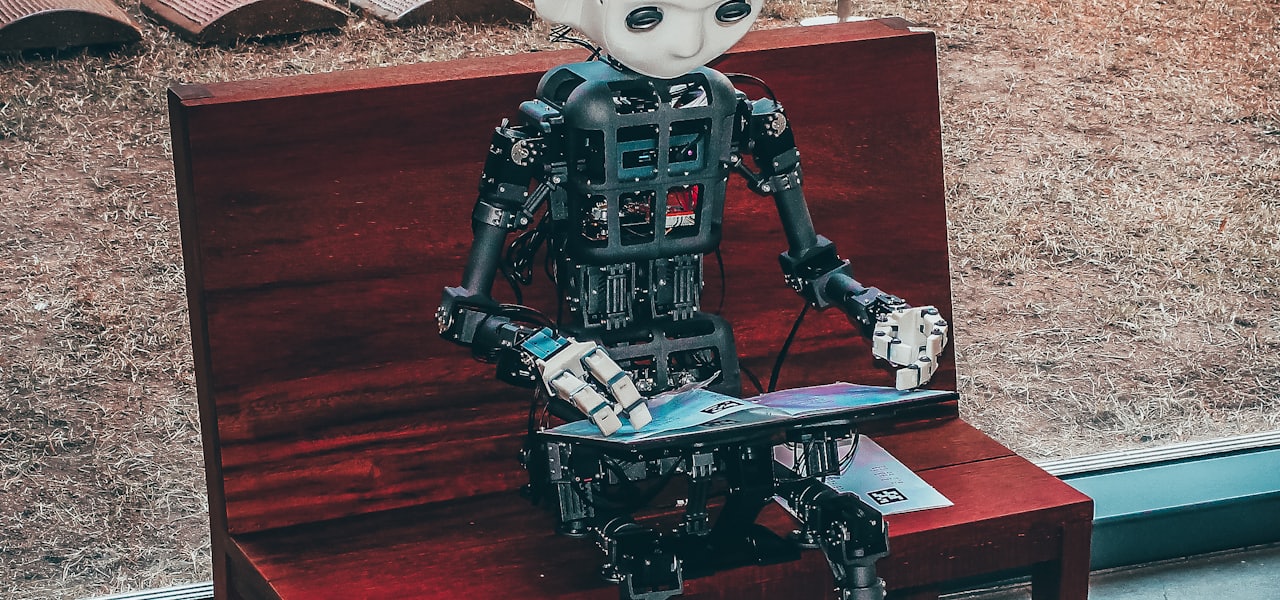
AI: When a Robot Writes a Play (in Czech: AI: Když robot píše hru) is a 2021 experimental theatre play, where 90% of its script was automatically generated by artificial intelligence (the GPT-2 language model). The play is in Czech language, but an English version of the script also exists. == Creation == The play is the first result of the THEaiTRE research project, aiming to commemorate the centenary of the R.U.R. play by Karel Čapek by investigating to what extent artificial intelligence could be used to create theatre play scripts. The script of the play was created using the THEaiTRobot tool, based on the GPT-2 language model. First, the play dramaturge, David Košťák, described the initial setting of each scene in a few sentences, and wrote the first line for each character. Next, THEaiTRobot suggested a continuation of the script, which the dramaturge could use, reject, or use part of it and let the tool generate a new continuation. Another option was to manually insert another line or a scenic remark. The script was generated in English and was automatically translated to Czech by the state-of-the-art CUBBITT machine translation tool. The resulting script was then further post-edited by the dramaturge. The resulting script was made freely available for non-commercial use both in English and in Czech, with marked manually inserted texts and manual edits. The analysis shows that 90% of the English script is automatically generated, with 10% manually written or manually post-edited. In the Czech script, a larger amount of edits were made, but the analysis claims that these additional edits are corrections of errors of the automated translation and stylistic corrections which do not change the meaning of the lines as represented by the English script, but rather bring the Czech script closer to the English one. == Characters == The play contains 9 characters. The Robot appears in all the scenes, while each of the other characters appears in only one scene. Robot – The lead character, a male humanoid robot. Master – An old man, the creator of the Robot. Boy – A schoolboy. Masseuse – A sex worker in a brothel. Stranger – An engineer. Man. Psychologist. Administrator – A female clerk at an employment agency. Actress – A film actress and a model in a robot-like costume. == Plot == The play is composed of 8 scenes. It tells the story of a humanoid robot, who encounters 8 other characters and engages into various typically human situations and activities, related to death, love, sex, violence, etc. The individual scenes are not tightly linked, but there are some linking points, such as the central character of the robot or some repeated and developing themes, such as the robot's search for love. The scenes often contain some absurd turns and it is often hard to find sense in them. It is therefore a very complicated piece interpretationally, requiring the director and the actors to invest a lot of effort and creativity in finding a meaningful interpretation which would not deviate from the script. In the interpretation by Švanda theatre, who premiered the play and who also participated on the creation of the script, the scenes typically contain non-verbally expressed content which can add a lot to the meaning of the scene compared to what is contained in the actual script (as the script only contains the lines said by the characters). === Scene 1: Death === The play opens by the Robot parting with his dying Master. The Master gives the Robot several last lessons and talks with him about death, soul, and love. === Scene 2: Sense of Humour === In the second scene, the Robot meets a sad and angry Boy, who complains that he wants to go to school, that his girlfriend is crazy, that he wants to buy a car, etc. The Robot tries to help the Boy by giving him advice, but the Boy's reactions are quite negative and irritated. The Boy then repeatedly asks the Robot to tell him a joke; the Robot keeps refusing, but ultimately tells the following joke: When you are dead. When your children are dead. When your grandchildren are dead, I will be still alive. === Scene 3: Nightclub === The Robot wants to feel pleasure, so he goes to a "night club" (a brothel), where he meets a "Masseuse" (a prostitute). The Robot is initially "a bit cold", but eventually manages to enjoy the experience and falls in love with the Masseuse. In the Švanda theatre performance, the Robot and the Masseuse seem to have a sort of virtual sex without touching each other, reminiscent of the sex scene in Demolition Man. === Scene 4: Fear of the Dark === It is the night. The Robot is standing under a lamp, unable to move away from the light as he finds that he is afraid of the dark. He meets a Stranger, an engineer who tells him that robots don't have feelings and that people cannot be trusted, and keeps hurting him. In the Švanda theatre performance, the Man repeatedly zaps the Robot with some kind of electric pulse. === Scene 5: Killer Robot === A Man approaches the Robot and repeatedly asks him to kill him. Instead, the Robot sticks a finger into the Man's anus, which leads to an argument between the Man and the Robot. === Scene 6: Burn Out === The Robot meets a Psychologist, who keeps asking him lots of questions regarding his life, burnout feeling, love, relationships, and emotions. They also talk about the Robot using a device called emotion machine which helps him to get rid of stress. === Scene 7: Search for Job === The Robot comes to an employment agency. He meets an Administrator and asks her to help him find a job. He expresses the wish to become an actor, and talks about his experience as a clown. He reveals his name to be Troy McClure, which is a character from The Simpsons who is an actor. In the Švanda theatre performance, the Administrator starts to seduce the Robot once his name is revealed, which he keeps ignoring; the Administrator then becomes irritated. === Scene 8: Love at First Sight === The Robot meets a human Actress in a robotic costume and falls in love with her immediately. The Actress is first reluctant, but the Robot manages to seduce her and she also falls in love with him. The Robot tells her about a binary world, in which he lives and where he will also take her. Ultimately, the Actress agrees, and the whole play concludes by the Robot and the Actress promising each to other to always be together. In the Švanda theatre performance, the Robot does not have a physical body in this scene, we can only hear his voice and see a pulsating light (based on the line in the script where the Robot says: "I have no body. So I don't need to wear clothes. You can't see me, you only hear me."), and the Actress eventually also agrees to lose her physical body so that she can be with the Robot forever. == Theatrical performances == The play premiered on 26 February 2021 in Švanda Theatre in Prague, Czech Republic, directed by Daniel Hrbek. Due to the COVID-19 pandemic, the play was not played in front of a live audience, but it was broadcast online, in Czech language with English subtitles. The play was followed by a panel discussion by the project members and experts on artificial intelligence. The premiere was viewed by 13,498 spectators worldwide. A short trailer of the premiere is available on YouTube. In 2021, after the opening of the theatres in the Czech Republic to spectators, the play can be viewed at Švanda Theatre. The performance takes approximately 60 minutes, and is followed by a discussion of the creators with the audience. The derniere is planned for 4 February 2023. == Reception == The play received a number of reviews, both in its country of origin as well as internationally. It is praised as first of its kind, although some reviewers note the similarity to previous works, such as the musical Beyond the Fence, the play Lifestyle of the Richard and Family, or the short movie Sunspring; however, these works used less advanced technology, and either were very short (Sunspring) or necessitated a larger amount of human interventions. The reviewers note that the script is far from perfect, with many inconsistencies and nonsensical parts, and conclude that the technology is definitely not yet ready to replace human authors; however, some find some parts of the script frighteningly human-like. The amount of human intervention is a somewhat controversial topic, with some reviewers finding the human influence too large (especially in interpreting the script and putting the play on scene), while others feel that a greater amount of human intervention would have been favorable as this could greatly improve the quality of the play. The reviews also frequently comment on the amount of sex, violence and strong language in the play; this can be attributed to the method used for creating the script, where the GPT-2 language model reflects topics and language common in the human-written articles on the internet that were used to train the model. Furthermore, some r
Information and media literacy
Information and media literacy (IML) is a combination of information literacy and media literacy. It enables people to show and make informed judgments as users of information and media, as well as to become skillful creators and producers of information and media messages. The transformative nature of IML includes creative works and creating new knowledge; to publish and collaborate responsibly requires ethical, cultural and social understanding. IML is also known as media and information literacy (MIL). UNESCO first adopted the term MIL in 2008 as a "composite concept" combining the competencies of information literacy and media literacy. UNESCO emphasizes the importance of global education in media and information literacy, and in 2013 defined Media and Information Literacy (MIL) as the ability to access, evaluate, use, and create information and media content in critical and ethical ways. Prior to the 1990s, the primary focus of information literacy was research skills. Media literacy, a study that emerged around the 1970s, traditionally focuses on the analysis and the delivery of information through various forms of media. Information literacy, as a skill proposed as early as 1974, centers on an individual's ability to recognize information needs and effectively locate, evaluate, and use information. These days, the study of information literacy has been extended to include the study of media literacy in many countries like the UK, Australia and New Zealand. It is also referred to as information and communication technologies (ICT) in the United States. Educators such as Gregory Ulmer have also defined the field as electracy.Media literacy is the ability to actively inquire into and think critically about information. It includes the ability to understand, evaluate, and create media content, and is an essential skill in today's information society. Livingstone, Van Couvering, and Thumim (2008) described the distinction between media literacy and information literacy: "Media literacy views media as lenses or windows for observing the world and expressing the self, whereas information literacy sees information as a tool for taking action in the world." == Integration of media and information literacy == Historically, the fields of information and media literacy have been separate, but over the course of the 21st century there have been calls to integrate both fields. Most definitions of information and media literacy include not only the abilities to locate, access, and analyze information but also the ability to create information. Only by integrating media literacy with information literacy can students better understand the sources of information and how it is used. Media education has primarily taken place in educational institutions, while information education has primarily occurred in libraries. Discussions surrounding the overlap of information literacy and media literacy came to fruition in the mid-to-late 2000s and 2010s as noted by Marcus Leaning. == In the digital age == The definition of literacy is "the ability to read and write". In practice many more skills are needed to locate, critically assess and make effective use of information. By extension, literacy now also includes the ability to manage and interact with digital information and media, in personal, shared and public domains. Historically, "information literacy" has largely been seen from the relatively top-down, organisational viewpoint of library and information sciences. However the same term is also used to describe a generic "information literacy" skill. The modern digital age has led to the proliferation of information spread across the Internet. Individuals must be able to recognize whether information is true or false and better yet know how to locate, evaluate, use, and communicate information in various formats; this is called information literacy. Towards the end of the 20th century, literacy was redefined to include "new literacies" relating to the new skills needed in everyday experience. "Multiliteracies" recognised the multiplicity of literacies, which were often used in combination. "21st century skills" frameworks link new literacies to wider life skills such as creativity, critical thinking, accountability. What these approaches have in common is a focus on the multiple skills needed by individuals to navigate changing personal, professional and public "information landscapes". As the conventional definition of literacy itself continues to evolve among practitioners, so too has the definition of information literacies. Noteworthy definitions include: Zurkowski defined information literacy as "the ability to find known or knowable content on any subject." CILIP, the Chartered Institute of Library and Information Practitioners, defines information literacy as "the ability to think critically and make balanced judgements about any information we find and use". In the United States, the definition proposed by the Association of College and Research Libraries (ACRL) is the most widely recognized. It defines information literacy as "a set of abilities requiring individuals to recognize when information is needed and to locate, evaluate, and use the needed information effectively." JISC, the Joint Information Systems Committee, refers to information literacy as one of six "digital capabilities", seen as an interconnected group of elements centered on "ICT literacy". Mozilla groups digital and other literacies as "21st century skills", a "broad set of knowledge, skills, habits and traits that are important to succeed in today's world". UNESCO, the United Nations Educational, Scientific and Cultural Organization, recognizing the necessity of teaching and learning both traditional and new types of information, the global importance of education was emphasized in 2008 through the "Teacher Media and Information Literacy (MIL) Curriculum". It defines MIL as a set of competencies that enable citizens to access, retrieve, understand, evaluate, use, create, and share information and media content in all formats through various tools in a critical, ethical, and effective manner, so as to participate in and carry out personal, professional, and social activities. Besides this, UNESCO also asserts information literacy as a "universal human right". == 21st-century students == In modern society, although the overall level of education has improved, the channels for knowledge production and dissemination have become increasingly diverse and commercialized, and traditional authoritative institutions no longer hold a monopoly over knowledge validation. While digital platforms have broadened access to information, they have also weakened trust mechanisms and evaluation standards, making epistemological skepticism a norm. Moreover, with the rise and spread of social media, misinformation and disinformation can be just as easily accessed in both densely and sparsely populated areas. These factors further underscore the importance of information literacy education. The IML learning capacities prepare students to be 21st century literate. According to Jeff Wilhelm (2000), "technology has everything to do with literacy. And being able to use the latest electronic technologies has everything to do with being literate." He supports his argument with J. David Bolter's statement that "if our students are not reading and composing with various electronic technologies, then they are illiterate. They are not just unprepared for the future; they are illiterate right now, in our current time and context". In a broader sense, developing this advanced competency of media and information literacy is essential, as it is crucial for students to exercise their freedom of expression in the 21st century. Wilhelm's statement is supported by the 2005 Wired World Phase II (YCWW II) survey conducted by the Media Awareness Network of Canada on 5000 Grade 4 – 11 students. The key findings of the survey were: 62% of Grade 4 students prefer the Internet. 38% of Grade 4 students prefer the library. 91% of Grade 11 students prefer the Internet. 9% of Grade 11 students prefer the library. Marc Prensky (2001) uses the term "digital native" to describe people who have been brought up in a digital world. The Internet has been a pervasive element of young people's home lives. 94% of kids reported that they had Internet access at home, and a significant majority (61%) had a high-speed connection. By the time kids reach Grade 11, half of them (51 percent) have their own Internet-connected computer, separate and apart from the family computer. The survey also showed that young Canadians are now among the most wired in the world. Contrary to the earlier stereotype of the isolated and awkward computer nerd, today's wired kid is a social kid. In general, many students are better networked through the use of technology than most teachers and parents, who may not understand the abilities of technology.
Small Data
Small Data: the Tiny Clues that Uncover Huge Trends is Martin Lindstrom's seventh book. It chronicles his work as a branding expert, working with consumers across the world to better understand their behavior. The theory behind the book is that businesses can better create products and services based on observing consumer behavior in their homes, as opposed to relying solely on big data. == Content == The book is based on a several year period of consumer studies for major corporations across the globe. It features case studies of the author's work interviewing consumers in their homes and using his observations to create hypotheses as to why they use products the way that they do. == Public reception == The book was a New York Times Bestseller upon release and was positively reviewed on several websites, Including Entrepreneur and Forbes. In 2016, it was named a Best Business Book by strategy+business and one of Inc. Magazine's Best Sales and Marketing books.
Pill reminder
A pill reminder is any device that reminds users to take medications. Traditional pill reminders are pill containers with electric timers attached, which can be preset for certain times of the day to set off an alarm. More sophisticated pill reminders can also detect when they have been opened, and therefore when the user is away during the time they were supposed to take their medication, they will be reminded of it when they return. This reminder can be in the form of a light, which also helps for deaf or hearing-impaired users. == Mobile app == A newer type of pill reminder is a mobile app that reminds the owner to take the medication. Some of these applications might effectively support adherence to taking medications.
QuickPar
QuickPar is a computer program that creates parchives used as verification and recovery information for a file or group of files, and uses the recovery information, if available, to attempt to reconstruct the originals from the damaged files and the PAR volumes. Designed for the Microsoft Windows operating system, in the past it was often used to recover damaged or missing files that have been downloaded through Usenet. QuickPar may also be used under Linux via Wine. There are two main versions of PAR files: PAR and PAR2. The PAR2 file format lifts many of its previous restrictions. QuickPar is freeware but not open-source. It uses the Reed-Solomon error correction algorithm internally to create the error correcting information. == Replacement == Since QuickPar hasn't been updated in 21 years, it is considered abandonware. Currently, MultiPar is accepted as the software that replaces QuickPar. MultiPar is actively being developed by Yutaka Sawada. == 64-bit versions == At present the command line version of QuickPar for Linux command line is available as a 64-bit version. None of the GUI versions available presently offer a 64-bit version.